36 / Reason 36 of 40Stress & Mind6 min read

Why You Cannot Sleep Before Big Work Days and Exams

You are lying in the dark, but your mind is already in tomorrow morning's meeting or the examination hall. Every time you close your eyes, you rehearse a presentation, worry about a difficult question, or mentalise a growing to-do list. This phenomenon, often termed 'pre-sleep cognitive arousal', is more than just a lack of willpower; it is a biological hijacking of your nervous system. When you anticipate high-stakes performance, your brain enters a state of hypervigilance that actively suppresses the transition into sleep. By focusing on tomorrow's demands, you trigger a feedback loop where the fear of being tired the next day actually increases your alertness, making rest even more elusive. Understanding the specific mechanism of how your brain prioritises perceived threats over physiological rest is the first step to regaining control. This article explores why the brain refuses to switch off when the stakes are high, the biological role of cortisol and core body temperature in this process, and what the latest sleep science suggests you can do to break the cycle of nighttime overthinking. You do not have to spend your nights performing mental labour; there are proven ways to signal safety to your brain and finally drift off.
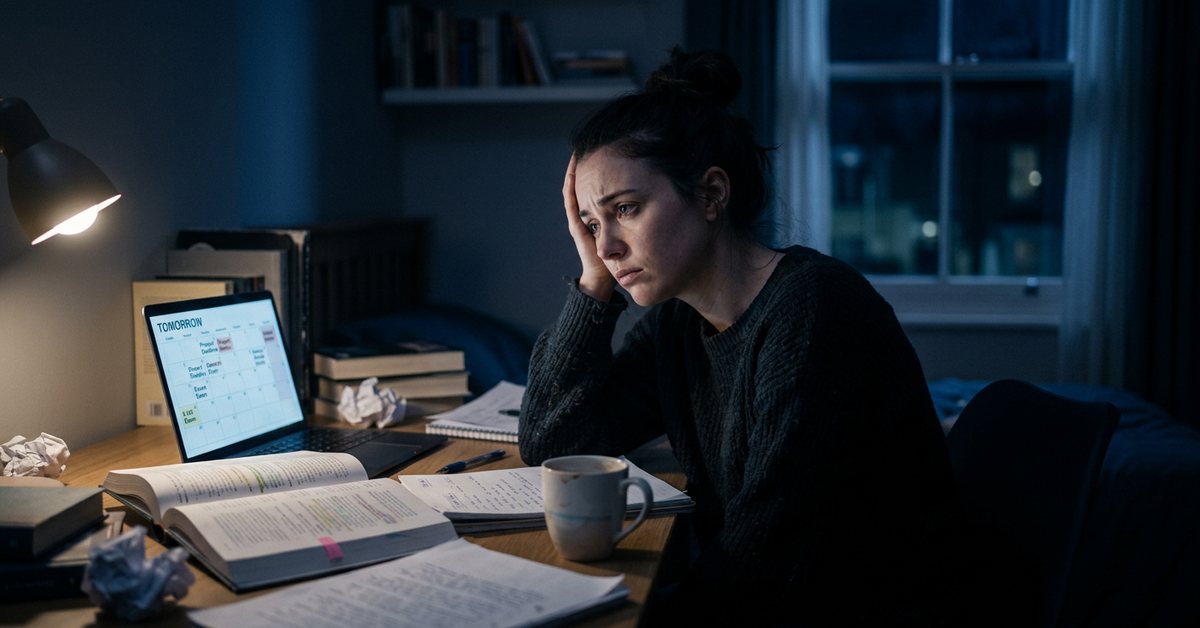
Overthinking tomorrow's work tasks and study exams - photographed for the Why Can't I Sleep guide. Images and Photos created by www.why-cant-sleep.com
Overthinking tomorrow's work tasks and study exams. Images and Photos created by www.why-cant-sleep.com
Share this photoEmailSMS

The weight of the unfinished task

The human brain is remarkably efficient at tracking incomplete goals, a psychological principle known as the Zeigarnik Effect. When you have a major work project or an exam looming, your brain categorises these as open loops that require resolution. Unfortunately, the brain does not distinguish between the actual execution of the task and the mental rehearsal of it during the night. Consequently, your subconscious keeps these thoughts in the foreground of your awareness to ensure you do not forget them, effectively keeping you in a state of cognitive readiness that is the direct enemy of sleep.

This mental persistence is particularly potent when the outcome of the task is tied to your identity or financial security. For students and professionals, the pressure to perform creates a sense of urgency that the brain interprets as a survival requirement. When your head hits the pillow, the lack of external distractions allows these internal pressures to amplify. Without the background noise of the day, the internal monologue regarding tomorrow's schedule becomes the loudest thing in the room, leading to hours of tossing and turning.

The biology of the alert mind

Sleep is not merely the absence of wakefulness; it is a complex biological transition that requires the suppression of the sympathetic nervous system. When you worry about tomorrow, your hypothalamic-pituitary-adrenal (HPA) axis becomes overactive, triggering the release of cortisol and adrenaline. These hormones are designed to keep you alert and responsive to danger. While they are useful during the actual exam or meeting, their presence at 2:00 AM prevents the natural drop in core body temperature required for deep sleep and interferes with the release of melatonin.

Furthermore, cognitive arousal affects the brain's sleep architecture by increasing the presence of fast-wave activity, such as beta waves, during what should be quiet rest. Usually, as you move toward sleep, your brain should transition into slower alpha and theta waves. However, the act of problem-solving or 'future-tripping' keeps the cortex highly active. This state of hyperarousal means that even if you do manage to drift off, your sleep is likely to be fragmented and shallow, leaving you feeling unrefreshed when the alarm finally rings.

What the scientific research says

Research consistently shows that the content of our pre-sleep thoughts directly dictates our sleep latency. A study by Scullin et al. (2018) in the Journal of Experimental Psychology found that individuals who took five minutes to write a specific to-do list for the following days fell asleep significantly faster than those who wrote about completed tasks. This suggests that externalising the 'open loops' in our mind can offload the cognitive burden, signaling to the brain that the information is stored safely and does not need to be actively rehearsed.

Additionally, the role of 'sleep effort' has been highlighted in clinical literature. According to Harvey (2002) in the journal Behaviour Research and Therapy, the more individuals worry about the consequences of not sleeping, the more anxious they become, which further fuels insomnia. This paradoxical effect means that the very act of trying to force sleep so you can be sharp for your exam actually makes the brain more wakeful. Science suggests that the most effective approach is to reduce the perceived importance of sleep on any single night.

The trap of mental rehearsal

Many people believe that by thinking through their work tasks at night, they are getting a head start or preparing themselves for success. In reality, this is a form of 'productive procrastination' that occurs at the expense of cognitive recovery. The brain requires the glymphatic system to clear out metabolic waste during deep sleep to function at peak capacity. By staying awake to plan, you are actually degrading the very cognitive resources, such as memory consolidation and executive function, that you will need to perform those tasks effectively the next day.

This rehearsal often takes the form of 'catastrophising', where the mind jumps to the worst-case scenario. You might start by thinking about a single slide in a presentation and end up worrying about your entire career trajectory. This escalation keeps the heart rate elevated and prevents the body from entering the parasympathetic state, also known as 'rest and digest', which is the necessary physiological foundation for falling asleep.

Overthinking tomorrow's work tasks and study exams - photographed for the Why Can't I Sleep guide. Images and Photos created by www.why-cant-sleep.com
The trap of mental rehearsal, illustrated. Images and Photos created by www.why-cant-sleep.com
Share this photoEmailSMS

Creating a cognitive firewall

To combat this, it is essential to create a clear boundary between the 'thinking day' and the 'resting night'. This is often referred to as a cognitive shutdown ritual. By intentionally ending your work or study period at a specific time and engaging in a transition activity, you teach your brain that the period for problem-solving has concluded. This might involve physically closing a laptop, tidying a desk, or writing down the first three things you will do the next morning.

The goal is to provide your mind with a sense of closure. When the brain knows there is a plan in place for the morning, it is less likely to feel the need to keep those thoughts active during the night. The transition period should focus on sensory activities rather than intellectual ones, helping to shift the focus from the abstract future to the concrete present.

What to do instead of overthinking

If you find yourself caught in a loop of work-related thoughts, the most effective tool is often 'Stimulus Control'. If you have been lying awake for more than twenty minutes, get out of bed. Go to a different room with dim lighting and perform a mundane task, such as folding laundry or reading a non-stimulating book. This prevents your brain from associating the bed with the stress of overthinking and helps reset your internal clock.

Another technique is 'Cognitive Shuffling'. This involves picking a random word and imagining objects that start with each letter of that word. Because this task is non-linear and requires just enough effort to distract from work stress but not enough to cause frustration, it can help scramble the logical, planning-oriented thoughts that keep you awake. It mimics the fragmented imagery that naturally occurs just as we fall asleep, essentially tricking the brain into a sleep-ready state.

Managing expectations and long-term habits

It is also helpful to reframe how you view a night of poor sleep before a big event. While it is not ideal, the human body is surprisingly resilient. Most people can perform quite well on one night of restricted sleep due to the temporary surge in adrenaline during the actual performance. Accepting that you might feel tired but will still be capable can lower the 'sleep effort' and, ironically, make it easier to fall asleep.

If this pattern of nighttime overthinking persists for more than three nights a week over several months, it may be indicative of a more chronic insomnia pattern rather than just situational stress. In such cases, it is important to consult a healthcare professional. For most, however, implementing better cognitive boundaries and understanding the biological drive behind their wakefulness is enough to restore a peaceful night's rest.

What to try tonight

  • 01Write a detailed to-do list for tomorrow at least two hours before bed to offload cognitive loops.
  • 02Practice cognitive shuffling by picturing random, unrelated objects to break the cycle of logical planning.
  • 03Leave the bedroom if you are still rehearsing tasks after 20 minutes to break the association between bed and stress.
  • 04Use a transition ritual, like dimming lights or light stretching, to signal the end of the working day to your nervous system.
  • 05Remind yourself that your body can still perform well even if you don't get a perfect night of sleep.
See all sleep remedies

Research and references

  1. 1. Scullin, M. L., et al. (2018). The effects of bedtime writing on difficulty falling asleep: A polysomnography study. Journal of Experimental Psychology: General.
  2. 2. Harvey, A. G. (2002). A cognitive model of insomnia. Behaviour Research and Therapy.
  3. 3. Wuyts, J., et al. (2012). The influence of pre-sleep cognitive arousal on sleep latency and cortical activity. Journal of Sleep Research.
  4. 4. Brosschot, J. F., et al. (2006). The perseverative cognition hypothesis: A review of worry, rumination, and health. Journal of Psychosomatic Research.

This page is general information, not medical advice. If sleeplessness persists for more than a few weeks, please speak with a doctor or a sleep clinician.
Tonight's full feature, chosen at random

38 / Reason 38 of 40Habits & Routine6 min read

Why Vigorous Evening Workouts Might Be Keeping You Awake

You have likely heard the common advice that physical activity is a pillar of good sleep, yet you may find yourself staring at the ceiling for hours after a late night gym session or a high intensity interval training class. This paradox occurs because timing is just as critical as the activity itself when it comes to your internal biology. When you engage in high intensity exercise too close to your scheduled sleep time, you trigger a physiological cascade that directly opposes the body's natural wind down process. The primary mechanism at play involves your core body temperature and the sympathetic nervous system. While regular movement eventually promotes deeper rest by increasing adenosine levels, the immediate aftermath of a vigorous workout keeps your heart rate elevated and your internal thermostat high. This heat prevents the necessary drop in core temperature that signals to your brain it is time for sleep. By understanding how late night exertion affects your hormones and nervous system, you can adjust your routine to ensure your fitness goals do not come at the expense of your recovery. If you struggle with persistent insomnia, it is important to consult a clinician for personalised support.

High intensity exercise too close to bedtime - photographed for the Why Can't I Sleep guide. Images and Photos created by www.why-cant-sleep.com
High intensity exercise too close to bedtime. Images and Photos created by www.why-cant-sleep.com
Share this photoEmailSMS

The Paradox of Physical Activity and Rest

Physical exercise is globally recognised as one of the most effective non pharmacological interventions for improving sleep quality. Regular movement helps to regulate the circadian rhythm and builds up sleep pressure throughout the day. However, the benefits of exercise are not always immediate, and for many individuals, the specific timing of a workout can mean the difference between falling asleep instantly and tossing and turning until the early hours of the morning.

High intensity exercise involves activities that push your heart rate to 70 percent or more of its maximum capacity. While these sessions are excellent for cardiovascular health and metabolic function, they place the body under a significant amount of temporary stress. When this stress occurs within two to three hours of your bedtime, it can override the natural signals your brain sends to initiate the transition into sleep, leaving you feeling tired but wired.

The Biological Mechanism of Post Workout Alertness

To understand why late night sprints or heavy lifting sessions disrupt sleep, we must look at core body temperature. Naturally, your body temperature begins to drop in the evening, reaching its lowest point in the middle of the night. This decline is a critical trigger for the production of melatonin, the hormone that facilitates sleep. High intensity exercise causes a sharp spike in internal heat that can take several hours to dissipate, effectively blocking the thermal signal the brain requires to enter a sleep state.

Beyond temperature, vigorous activity stimulates the sympathetic nervous system, often called the fight or flight response. This leads to an increase in heart rate and the secretion of hormones like cortisol and adrenaline. While these are necessary for physical performance, they act as stimulants that keep the brain in a state of high arousal. Furthermore, while exercise eventually increases adenosine, the chemical responsible for sleep hunger, the immediate surge in stimulating neurochemicals can mask this need for rest in the short term.

How Late Workouts Alter Sleep Architecture

Sleep architecture refers to the cyclical pattern of sleep stages, including light sleep, deep sleep, and REM sleep. Research indicates that exercising too close to bedtime can significantly delay sleep onset latency, which is the time it takes to transition from full wakefulness to sleep. Even if you manage to fall asleep, the quality of that sleep may be compromised as the body continues to process the physiological aftermath of the workout.

Specifically, an elevated heart rate during the first few hours of the night can reduce the amount of time spent in deep, restorative slow wave sleep. This stage is crucial for physical repair and immune function. If the body is still busy bringing its core temperature down and metabolising stress hormones, it may spend more time in lighter stages of sleep, leading to a feeling of grogginess the following morning despite having spent enough hours in bed.

What the Scientific Research Indicates

Scientific literature has long debated the exact cutoff point for evening exercise. A comprehensive meta analysis published by Stutz et al. (2019) in Sports Medicine found that while evening exercise generally benefits sleep, high intensity training completed less than one hour before bedtime resulted in a significant decrease in sleep quality and a longer time to fall asleep. The researchers noted that the key factor was the recovery period allowed between the cessation of activity and the lights out time.

Further studies have focused on the hormonal impact of late night exertion. Thomas et al. (2020) demonstrated in the Journal of Clinical Sleep Medicine that vigorous late night activity can delay the surge of nocturnal melatonin. Another study by Yamanaka et al. (2015) in the American Journal of Physiology highlighted that physical load in the evening increases sympathetic nervous activity during the first half of the night, which directly correlates with higher heart rates during sleep and reduced recovery markers.

High intensity exercise too close to bedtime - photographed for the Why Can't I Sleep guide. Images and Photos created by www.why-cant-sleep.com
What the Scientific Research Indicates, illustrated. Images and Photos created by www.why-cant-sleep.com
Share this photoEmailSMS

Individual Variability and Sensitivity

It is important to note that not everyone reacts to evening exercise in the same way. Genetic factors, fitness levels, and chronotypes play a role in how quickly an individual can recover from a late session. Some people, often referred to as night owls, may find that their bodies handle evening exertion better than those who are naturally early risers. However, for the majority of the population, the physiological laws of thermoregulation remain a constant barrier to rest.

As we age, our circadian rhythms can become more sensitive to disruptions. What you were able to do in your twenties without consequence might become a major source of insomnia in your forties. If you find that you are consistently struggling to settle after a workout, your body is likely providing feedback that the current timing of your routine is incompatible with your biological need for nocturnal cooling and nervous system downregulation.

What to Do Instead for Better Rest

If your schedule only allows for evening movement, the most effective strategy is to shift the intensity downward. Low to moderate intensity activities, such as walking, gentle yoga, or light stretching, do not cause the same spike in core temperature or adrenaline. In fact, these activities can assist in the wind down process by promoting relaxation and helping to relieve the physical tension accumulated throughout the work day.

For those who cannot move their high intensity sessions to the morning or lunch hour, increasing the buffer zone is essential. Aim to finish vigorous training at least three hours before you plan to sleep. During this window, focus on active cooling strategies such as a lukewarm shower, which can help draw heat away from the core, and avoid blue light exposure which further suppresses melatonin. Shifting your heaviest training days to weekends or earlier time slots can also preserve your sleep quality during the work week.

Conclusion and Next Steps

Optimising your sleep does not mean you have to give up on your fitness goals, but it does require a strategic approach to timing. By respecting the body's need for a cooling period and a reduction in sympathetic nervous activity, you ensure that the hard work you put in at the gym is actually supported by the recovery that happens during rest. Sleep is the foundation upon which all physical gains are built, and protecting it is just as important as the workout itself.

If you have adjusted your exercise timing and still find that you cannot sleep, there may be other underlying factors at play. Persistent difficulty falling or staying asleep should be discussed with a healthcare professional. For more information on how daily habits influence your rest, continue exploring our guides on sleep hygiene and circadian health. If you experience chronic insomnia, please see a clinician for a formal assessment and guidance.

What to try tonight

  • 01Finish high intensity interval training at least three hours before your planned bedtime.
  • 02Switch to low intensity activities like restorative yoga or walking if exercising late in the evening.
  • 03Take a lukewarm shower after a late workout to assist the body in lowering its core temperature.
  • 04Prioritise a consistent wind down routine that excludes bright lights and stimulating media after evening exercise.
  • 05Monitor your heart rate and sleep quality using a diary to identify your personal threshold for evening exertion.
See all sleep remedies

Research and references

  1. 1. Stutz et al. (2019). Effects of Evening Exercise on Sleep in Healthy Participants: A Systematic Review and Meta-Analysis. Sports Medicine.
  2. 2. Thomas et al. (2020). The effect of exercise timing on sleep architecture and evening melatonin levels in healthy adults. Journal of Clinical Sleep Medicine.
  3. 3. Yamanaka et al. (2015). Physical exercise and its effect on sleep, the circadian clock, and the sympathetic nervous system. American Journal of Physiology.

This page is general information, not medical advice. If sleeplessness persists for more than a few weeks, please speak with a doctor or a sleep clinician.