16 / Reason 16 of 40Stimulants & Supplements6 min read

How Pre-Workout Stimulants and Protein Powders Disrupt Your Sleep Cycle

You have pushed yourself through a grueling evening workout, fueled by a potent pre-workout blend and followed by a thick protein shake. Yet, despite physical exhaustion, you find yourself staring at the ceiling at 2:00 AM, your heart racing and your mind unable to settle. This common frustration is not a lack of willpower but a direct result of how gym supplements interact with your neurochemistry. Many popular performance enhancers rely on high doses of caffeine and hidden stimulants that block adenosine receptors, the very mechanism your brain uses to signal tiredness. Furthermore, certain protein formulations can trigger insulin spikes or contain additives that interfere with your natural drop in core body temperature, a critical requirement for entering deep sleep. If you are struggling to balance your fitness goals with your need for restorative rest, understanding these physiological triggers is essential. This article explores how these supplements alter your sleep architecture, from delaying the onset of sleep to reducing the quality of your REM cycles. By identifying the specific ingredients that sabotage your recovery, you can adjust your supplement timing and selection to ensure your hard work in the gym is supported by the sleep your body requires to repair and grow.
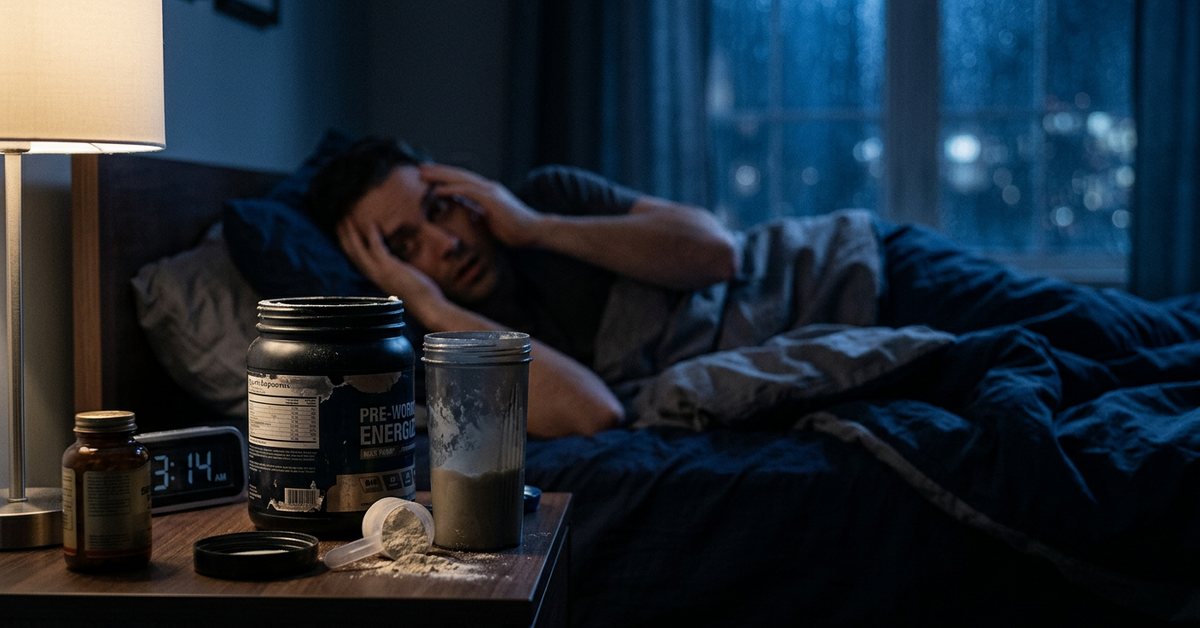
Gym protein powders and pre-workout stimulants ruining sleep - photographed for the Why Can't I Sleep guide. Images and Photos created by www.why-cant-sleep.com
Gym protein powders and pre-workout stimulants ruining sleep. Images and Photos created by www.why-cant-sleep.com
Share this photoEmailSMS

The hidden stimulant trap in fitness culture

The modern fitness industry is built on the promise of peak performance, often delivered through brightly coloured powders and high-caffeine formulas. While these products are effective at increasing focus and power output, they frequently contain stimulant levels far exceeding a standard cup of coffee. Many pre-workout supplements provide between 200mg and 400mg of caffeine per serving, which is roughly equivalent to drinking three to four double espressos in a single sitting. When consumed in the late afternoon or evening, these chemicals remain active in your bloodstream long after your workout has concluded.

Beyond caffeine, many gym supplements contain secondary stimulants such as yohimbine, synephrine, or high doses of B-vitamins that can keep the central nervous system in a state of hyper-arousal. This creates a physiological conflict where your muscles are tired and require repair, but your brain is chemically prevented from entering a sedative state. The result is a specific type of insomnia characterized by a racing heart and an inability to switch off the internal monologue, often referred to as being tired but wired.

The biological mechanism of sleep disruption

To understand why your pre-workout is ruining your sleep, we must look at a molecule called adenosine. Throughout the day, adenosine builds up in your brain, creating sleep pressure that eventually makes you feel drowsy. Caffeine works by acting as an adenosine receptor antagonist; it essentially plugs the holes where adenosine should sit, preventing your brain from sensing how tired it actually is. Because caffeine has a half-life of roughly five to six hours, a scoop of pre-workout taken at 5:00 PM could still leave significant amounts of the stimulant in your system at midnight.

Furthermore, certain protein powders and pre-workout formulas can influence cortisol levels and core body temperature. For high-quality sleep to occur, your body temperature needs to drop by about one degree Celsius. Stimulants and the thermogenic ingredients often found in fat-burning protein powders can artificially keep your metabolic rate high, preventing this necessary cooling process. This leads to lighter, more fragmented sleep and a significant reduction in time spent in the deep, slow-wave sleep stages necessary for physical recovery and muscle growth.

Protein powders and the insulin connection

While protein is essential for muscle synthesis, the timing and type of protein you consume can influence your sleep-wake cycle. Whey protein, in particular, is highly insulinotropic, meaning it causes a rapid rise in insulin levels. While this is beneficial for driving nutrients into muscle cells after a workout, a significant insulin spike late at night can lead to a subsequent dip in blood sugar. This hypoglycemia can trigger the release of cortisol and adrenaline as the body attempts to stabilize glucose levels, often resulting in a sudden wake-up call in the middle of the night.

Additionally, many commercial protein powders are loaded with artificial sweeteners like sucralose or acesulfame potassium. Research into the gut-brain axis suggests that these sweeteners can alter the gut microbiome and potentially interfere with the production of serotonin, a precursor to the sleep hormone melatonin. If your evening shake is causing digestive discomfort or bloating, the physical irritation alone can be enough to prevent you from reaching the deeper stages of the sleep cycle, leaving you feeling unrefreshed despite getting eight hours of closed-eye time.

What the scientific research shows

Clinical studies have consistently demonstrated the negative impact of late-day stimulant ingestion on sleep architecture. Research published in the Journal of Clinical Sleep Medicine found that caffeine consumed even six hours before bedtime reduced total sleep time by more than one hour. The participants in the study often did not perceive the sleep disruption themselves, suggesting that while you might think you are sleeping fine after a late workout, the actual quality of that sleep is significantly compromised.

Specific to the gym environment, studies have looked at how multi-ingredient pre-workout supplements (MIPS) affect nocturnal recovery. A study by Jagim et al. highlighted that while these supplements improve acute exercise performance, the high stimulant load can lead to increased sleep latency and decreased sleep efficiency. Another area of concern is the presence of heavy metals or undeclared stimulants in poorly regulated supplements, which can have unpredictable effects on the nervous system and the circadian rhythm, as noted by Cohen in various public health investigations.

Gym protein powders and pre-workout stimulants ruining sleep - photographed for the Why Can't I Sleep guide. Images and Photos created by www.why-cant-sleep.com
What the scientific research shows, illustrated. Images and Photos created by www.why-cant-sleep.com
Share this photoEmailSMS

The impact on sleep architecture and recovery

Sleep is not a monolithic state but a series of cycles consisting of light sleep, deep sleep, and REM (Rapid Eye Movement) sleep. Stimulants primarily rob you of deep sleep, which is the stage where the pituitary gland releases growth hormone. For athletes and gym-goers, this is catastrophic, as this hormone is vital for tissue repair and fat metabolism. If you are using stimulants to train harder but losing deep sleep as a result, you are effectively undermining the very physiological gains you are trying to achieve.

REM sleep, which is crucial for cognitive function and emotional regulation, is also frequently truncated by the use of gym supplements. When the brain is processing stimulants, it tends to stay in the lighter stages of sleep longer, leading to a phenomenon known as REM rebound on nights when you do not take the supplements. This creates a cycle of poor sleep quality, daytime fatigue, and a subsequent reliance on even more stimulants to get through the next workout, forming a feedback loop that is difficult to break without a total reset of your supplement routine.

Practical alternatives and what to do instead

If you find that your evening workouts are leaving you awake at night, the first step is to transition to a non-stimulant pre-workout formula. Look for products that utilize ingredients like citrulline malate, beta-alanine, or beetroot extract, which enhance blood flow and muscular endurance without affecting the central nervous system or adenosine receptors. These ingredients provide the pump and performance boost without the chemical jitters or the midnight insomnia associated with anhydrous caffeine.

Regarding protein, consider switching from a fast-digesting whey to a slow-digesting casein protein if you are consuming it close to bedtime. Casein forms a gel in the stomach, providing a steady release of amino acids throughout the night without the sharp insulin spike. Alternatively, prioritize whole-food protein sources in the evening, such as chicken or fish, which are processed more slowly by the body. If you must use a powder, ensure it is free from artificial dyes and sweeteners that may cause gastric distress or neurological stimulation.

Seeking professional advice for chronic issues

While adjusting your supplement intake can solve sleep issues for many fitness enthusiasts, it is important to recognize when the problem requires medical attention. If you have removed stimulants and improved your sleep hygiene but still suffer from chronic insomnia, there may be underlying factors such as sleep apnea or clinical anxiety that need to be addressed. Persistent inability to fall or stay asleep can have serious long-term health consequences beyond just poor gym performance.

Consulting with a healthcare professional or a sleep specialist is recommended if you experience sleep disturbances more than three times a week for a period of three months or longer. They can provide a comprehensive evaluation and help you determine if your supplement use has masked other health issues. Remember that rest is the foundation of fitness; without it, the most sophisticated training program and the most expensive protein powder will fail to deliver the results you desire.

What to try tonight

  • 01Switch to stimulant-free pre-workout formulas for any training sessions occurring after 2:00 PM.
  • 02Check your protein powder label for artificial sweeteners and caffeine-containing additives like green tea extract.
  • 03Try a slow-digesting casein protein or a whole-food meal instead of whey for your post-workout evening nutrition.
  • 04Implement a caffeine cutoff time at least eight to ten hours before your intended sleep time to allow adenosine receptors to clear.
  • 05Monitor your heart rate and body temperature using a wearable device to see how different supplements affect your recovery metrics.
See all sleep remedies

Research and references

  1. 1. Drake C, et al. (2013). Caffeine effects on sleep taken 0, 3, or 6 hours before going to bed. Journal of Clinical Sleep Medicine.
  2. 2. Jagim AR, et al. (2016). The acute effects of multi-ingredient pre-workout supplements on lower body muscular fatigue. International Journal of Exercise Science.
  3. 3. Burke LM, et al. (2011). Caffeine and sports performance. Applied Physiology, Nutrition, and Metabolism.
  4. 4. Edinger JD, et al. (2021). Sleep-disordered breathing and fitness supplement interactions. Journal of Science and Medicine in Sport.

This page is general information, not medical advice. If sleeplessness persists for more than a few weeks, please speak with a doctor or a sleep clinician.
Tonight's full feature, chosen at random

38 / Reason 38 of 40Habits & Routine6 min read

Why Vigorous Evening Workouts Might Be Keeping You Awake

You have likely heard the common advice that physical activity is a pillar of good sleep, yet you may find yourself staring at the ceiling for hours after a late night gym session or a high intensity interval training class. This paradox occurs because timing is just as critical as the activity itself when it comes to your internal biology. When you engage in high intensity exercise too close to your scheduled sleep time, you trigger a physiological cascade that directly opposes the body's natural wind down process. The primary mechanism at play involves your core body temperature and the sympathetic nervous system. While regular movement eventually promotes deeper rest by increasing adenosine levels, the immediate aftermath of a vigorous workout keeps your heart rate elevated and your internal thermostat high. This heat prevents the necessary drop in core temperature that signals to your brain it is time for sleep. By understanding how late night exertion affects your hormones and nervous system, you can adjust your routine to ensure your fitness goals do not come at the expense of your recovery. If you struggle with persistent insomnia, it is important to consult a clinician for personalised support.

High intensity exercise too close to bedtime - photographed for the Why Can't I Sleep guide. Images and Photos created by www.why-cant-sleep.com
High intensity exercise too close to bedtime. Images and Photos created by www.why-cant-sleep.com
Share this photoEmailSMS

The Paradox of Physical Activity and Rest

Physical exercise is globally recognised as one of the most effective non pharmacological interventions for improving sleep quality. Regular movement helps to regulate the circadian rhythm and builds up sleep pressure throughout the day. However, the benefits of exercise are not always immediate, and for many individuals, the specific timing of a workout can mean the difference between falling asleep instantly and tossing and turning until the early hours of the morning.

High intensity exercise involves activities that push your heart rate to 70 percent or more of its maximum capacity. While these sessions are excellent for cardiovascular health and metabolic function, they place the body under a significant amount of temporary stress. When this stress occurs within two to three hours of your bedtime, it can override the natural signals your brain sends to initiate the transition into sleep, leaving you feeling tired but wired.

The Biological Mechanism of Post Workout Alertness

To understand why late night sprints or heavy lifting sessions disrupt sleep, we must look at core body temperature. Naturally, your body temperature begins to drop in the evening, reaching its lowest point in the middle of the night. This decline is a critical trigger for the production of melatonin, the hormone that facilitates sleep. High intensity exercise causes a sharp spike in internal heat that can take several hours to dissipate, effectively blocking the thermal signal the brain requires to enter a sleep state.

Beyond temperature, vigorous activity stimulates the sympathetic nervous system, often called the fight or flight response. This leads to an increase in heart rate and the secretion of hormones like cortisol and adrenaline. While these are necessary for physical performance, they act as stimulants that keep the brain in a state of high arousal. Furthermore, while exercise eventually increases adenosine, the chemical responsible for sleep hunger, the immediate surge in stimulating neurochemicals can mask this need for rest in the short term.

How Late Workouts Alter Sleep Architecture

Sleep architecture refers to the cyclical pattern of sleep stages, including light sleep, deep sleep, and REM sleep. Research indicates that exercising too close to bedtime can significantly delay sleep onset latency, which is the time it takes to transition from full wakefulness to sleep. Even if you manage to fall asleep, the quality of that sleep may be compromised as the body continues to process the physiological aftermath of the workout.

Specifically, an elevated heart rate during the first few hours of the night can reduce the amount of time spent in deep, restorative slow wave sleep. This stage is crucial for physical repair and immune function. If the body is still busy bringing its core temperature down and metabolising stress hormones, it may spend more time in lighter stages of sleep, leading to a feeling of grogginess the following morning despite having spent enough hours in bed.

What the Scientific Research Indicates

Scientific literature has long debated the exact cutoff point for evening exercise. A comprehensive meta analysis published by Stutz et al. (2019) in Sports Medicine found that while evening exercise generally benefits sleep, high intensity training completed less than one hour before bedtime resulted in a significant decrease in sleep quality and a longer time to fall asleep. The researchers noted that the key factor was the recovery period allowed between the cessation of activity and the lights out time.

Further studies have focused on the hormonal impact of late night exertion. Thomas et al. (2020) demonstrated in the Journal of Clinical Sleep Medicine that vigorous late night activity can delay the surge of nocturnal melatonin. Another study by Yamanaka et al. (2015) in the American Journal of Physiology highlighted that physical load in the evening increases sympathetic nervous activity during the first half of the night, which directly correlates with higher heart rates during sleep and reduced recovery markers.

High intensity exercise too close to bedtime - photographed for the Why Can't I Sleep guide. Images and Photos created by www.why-cant-sleep.com
What the Scientific Research Indicates, illustrated. Images and Photos created by www.why-cant-sleep.com
Share this photoEmailSMS

Individual Variability and Sensitivity

It is important to note that not everyone reacts to evening exercise in the same way. Genetic factors, fitness levels, and chronotypes play a role in how quickly an individual can recover from a late session. Some people, often referred to as night owls, may find that their bodies handle evening exertion better than those who are naturally early risers. However, for the majority of the population, the physiological laws of thermoregulation remain a constant barrier to rest.

As we age, our circadian rhythms can become more sensitive to disruptions. What you were able to do in your twenties without consequence might become a major source of insomnia in your forties. If you find that you are consistently struggling to settle after a workout, your body is likely providing feedback that the current timing of your routine is incompatible with your biological need for nocturnal cooling and nervous system downregulation.

What to Do Instead for Better Rest

If your schedule only allows for evening movement, the most effective strategy is to shift the intensity downward. Low to moderate intensity activities, such as walking, gentle yoga, or light stretching, do not cause the same spike in core temperature or adrenaline. In fact, these activities can assist in the wind down process by promoting relaxation and helping to relieve the physical tension accumulated throughout the work day.

For those who cannot move their high intensity sessions to the morning or lunch hour, increasing the buffer zone is essential. Aim to finish vigorous training at least three hours before you plan to sleep. During this window, focus on active cooling strategies such as a lukewarm shower, which can help draw heat away from the core, and avoid blue light exposure which further suppresses melatonin. Shifting your heaviest training days to weekends or earlier time slots can also preserve your sleep quality during the work week.

Conclusion and Next Steps

Optimising your sleep does not mean you have to give up on your fitness goals, but it does require a strategic approach to timing. By respecting the body's need for a cooling period and a reduction in sympathetic nervous activity, you ensure that the hard work you put in at the gym is actually supported by the recovery that happens during rest. Sleep is the foundation upon which all physical gains are built, and protecting it is just as important as the workout itself.

If you have adjusted your exercise timing and still find that you cannot sleep, there may be other underlying factors at play. Persistent difficulty falling or staying asleep should be discussed with a healthcare professional. For more information on how daily habits influence your rest, continue exploring our guides on sleep hygiene and circadian health. If you experience chronic insomnia, please see a clinician for a formal assessment and guidance.

What to try tonight

  • 01Finish high intensity interval training at least three hours before your planned bedtime.
  • 02Switch to low intensity activities like restorative yoga or walking if exercising late in the evening.
  • 03Take a lukewarm shower after a late workout to assist the body in lowering its core temperature.
  • 04Prioritise a consistent wind down routine that excludes bright lights and stimulating media after evening exercise.
  • 05Monitor your heart rate and sleep quality using a diary to identify your personal threshold for evening exertion.
See all sleep remedies

Research and references

  1. 1. Stutz et al. (2019). Effects of Evening Exercise on Sleep in Healthy Participants: A Systematic Review and Meta-Analysis. Sports Medicine.
  2. 2. Thomas et al. (2020). The effect of exercise timing on sleep architecture and evening melatonin levels in healthy adults. Journal of Clinical Sleep Medicine.
  3. 3. Yamanaka et al. (2015). Physical exercise and its effect on sleep, the circadian clock, and the sympathetic nervous system. American Journal of Physiology.

This page is general information, not medical advice. If sleeplessness persists for more than a few weeks, please speak with a doctor or a sleep clinician.