17 / Reason 17 of 40Stimulants & Supplements6 min read

How Minoxidil for Hair Growth May Impact Your Sleep Quality

You are dedicated to your hair restoration routine, but lately, you have noticed your heart racing as soon as your head hits the pillow. If you are using minoxidil to combat thinning hair and finding yourself wide awake at 3:00 AM, you are not alone. While this vasodilator is a gold standard for regrowth, its systemic absorption can trigger a cascade of physiological responses that are fundamentally at odds with deep rest. By widening blood vessels, minoxidil can inadvertently activate your sympathetic nervous system, leading to an elevated resting heart rate and palpitations that make relaxation impossible. This article explores the biological connection between topical hair treatments and nocturnal wakefulness. We examine how the drug influences your cardiovascular system and disrupts the delicate transition into sleep. You will learn why your body might be reacting this way, what the latest clinical research says about these side effects, and how you can adjust your routine to protect both your hair and your health. If you have been wondering why your heart feels like it is running a marathon while you are trying to dream, the answer may be sitting on your bathroom vanity.
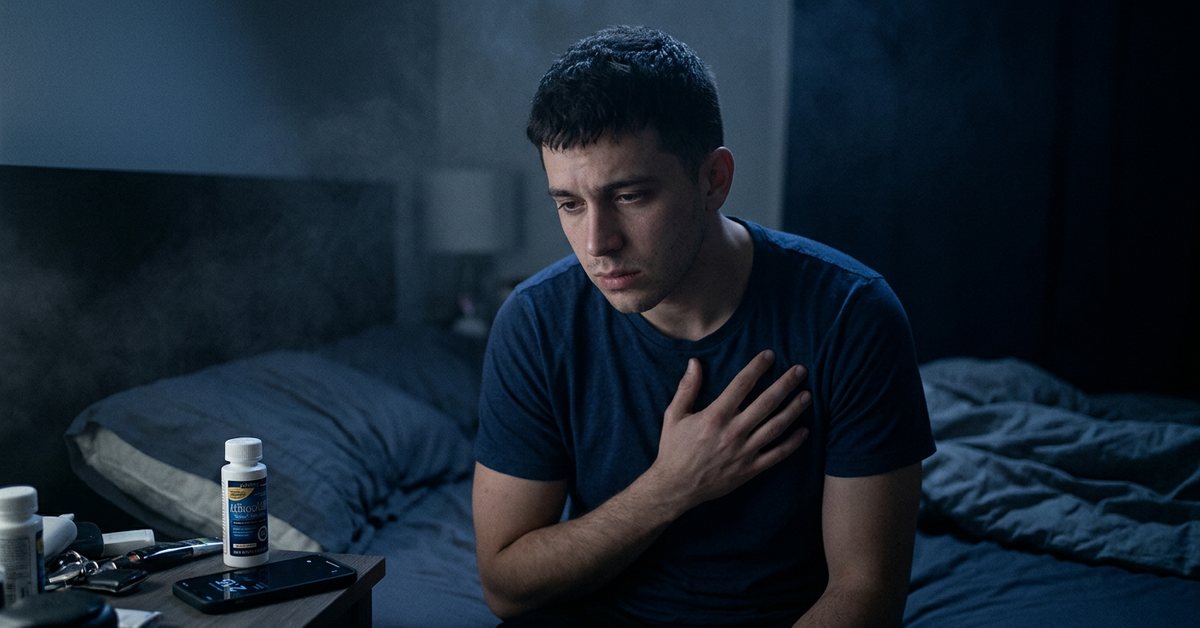
Minoxidil, hair regrowth, heart palpitations and sleeplessness - photographed for the Why Can't I Sleep guide. Images and Photos created by www.why-cant-sleep.com
Minoxidil, hair regrowth, heart palpitations and sleeplessness. Images and Photos created by www.why-cant-sleep.com
Share this photoEmailSMS

The Link Between Vasodilators and Wakefulness

Minoxidil was originally developed as an oral medication to treat severe high blood pressure. Its primary function is as a peripheral vasodilator, meaning it relaxes the smooth muscles in your blood vessel walls to allow for increased blood flow. While this is excellent for delivering nutrients to dormant hair follicles, the drug does not always remain localised to the scalp. A small percentage of the solution is absorbed systemically into the bloodstream, where it can begin to influence the entire cardiovascular system.

When your blood vessels dilate significantly, your blood pressure can drop slightly. In response, the body often triggers a compensatory mechanism known as reflex tachycardia. This is your heart's way of maintaining stable blood pressure by increasing the number of beats per minute. For many users, this manifests as a fluttering sensation or pounding in the chest, particularly when lying flat in a quiet room. This physical agitation is a significant barrier to the onset of sleep.

Impact on the Sympathetic Nervous System

The transition to sleep requires the dominance of the parasympathetic nervous system, often called the rest and digest mode. However, the physiological stress caused by minoxidil-induced vasodilation can keep the sympathetic nervous system, or the fight or flight response, highly active. This state of hyperarousal is characterised by elevated levels of circulating catecholamines, which are hormones like adrenaline that prepare the body for action rather than rest.

Because the body perceives the drop in blood pressure and subsequent heart rate spike as a stress event, it may delay the release of melatonin, the hormone responsible for signalling that it is time to sleep. Instead of the natural cooling of core body temperature that usually precedes slumber, the increased blood flow and metabolic activity can keep your temperature higher than ideal. This biological mismatch makes it difficult for the brain to enter the deeper stages of the sleep cycle.

Blood Flow and Core Body Temperature

One of the critical biological triggers for sleep is a drop in core body temperature. As your circadian rhythm prepares you for rest, your body shunts heat to your extremities to cool your internal organs. Minoxidil interferes with this process by altering peripheral blood flow. By forcing vessels to stay open, it can disrupt the body's thermoregulation, making you feel uncomfortably warm or causing night sweats, both of which are common reasons for midnight awakenings.

Furthermore, the drug can influence the balance of adenosine in the brain. Adenosine is a chemical that builds up throughout the day to create sleep pressure. While the direct interaction between minoxidil and adenosine receptors requires more specific study, the general physiological disruption caused by an elevated heart rate is often enough to override the natural drive for sleep, leaving the user feeling tired but wired.

What the Scientific Research Shows

Clinical observations have long noted the cardiovascular side effects of minoxidil, even in its topical form. A study published in the Journal of the American Academy of Dermatology by Olsen et al. (2002) noted that while topical minoxidil is generally well-tolerated, a subset of patients experienced increased heart rate and palpitations. These symptoms were more prevalent in those using higher concentrations, such as the five percent solution, compared to the two percent variant.

Research by Suchonwanit et al. (2019) in the journal Drug Design, Development and Therapy highlighted that systemic absorption, though low, can be sufficient to cause side effects in sensitive individuals. The study pointed out that the presence of scalp inflammation or the use of dermarollers can significantly increase the amount of the drug entering the bloodstream, thereby increasing the risk of nocturnal heart palpitations and subsequent insomnia.

Minoxidil, hair regrowth, heart palpitations and sleeplessness - photographed for the Why Can't I Sleep guide. Images and Photos created by www.why-cant-sleep.com
What the Scientific Research Shows, illustrated. Images and Photos created by www.why-cant-sleep.com
Share this photoEmailSMS

The Role of Application Timing

Many users apply their hair regrowth treatment immediately before bed to allow it to work overnight. However, this timing coincides with the period when the body is most sensitive to cardiovascular changes. Applying the solution late in the evening means that peak systemic absorption occurs just as you are trying to reach deep sleep. The alcohol or propylene glycol base in many formulas can also cause skin irritation, adding another layer of physical discomfort that prevents rest.

If you apply minoxidil and then lie down, the change in posture can exacerbate the feeling of heart palpitations. When you are horizontal, you are more likely to notice the force of your heartbeat against your chest or in your ears. This awareness often leads to anxiety, which further increases the heart rate, creating a self-sustaining cycle of sleeplessness and worry about one's health.

Practical Adjustments for Better Rest

If you suspect your hair treatment is ruining your sleep, the first step is to adjust the timing of your application. Moving your evening dose to at least four hours before you plan to sleep can allow the initial cardiovascular surge to plateau before you head to bed. This gives your body time to stabilise its blood pressure and heart rate, making the transition to the parasympathetic state much smoother.

Another consideration is the dosage and method of delivery. Some users find that switching from a liquid solution to a foam version reduces scalp irritation and potentially slows the rate of absorption. Reducing the frequency of application or using a lower concentration may also alleviate symptoms while still providing some benefits for hair density. Always ensure your scalp is not broken or irritated before application, as this prevents excessive systemic entry.

When to Consult a Professional

While mild palpitations can be a side effect of the medication, persistent heart rhythm changes or significant insomnia should never be ignored. Sleep deprivation has a cumulative effect on your health, impacting everything from cognitive function to immune response. If you find that your heart continues to race even after adjusting your application time, it is essential to speak with a healthcare provider to rule out underlying conditions.

A clinician can help determine if you are particularly sensitive to vasodilators or if your symptoms are unrelated to your hair care routine. They may suggest alternative treatments for hair loss that do not have the same cardiovascular profile. Remember, maintaining your health is more important than the speed of hair regrowth. If you suffer from persistent insomnia, please see a clinician for a full evaluation and personalised advice.

What to try tonight

  • 01Apply your evening dose of minoxidil at least four hours before going to bed.
  • 02Switch to a foam-based formula to potentially reduce rapid systemic absorption.
  • 03Monitor your caffeine intake, as it can compound the heart-racing effects of the medication.
  • 04Avoid using a dermaroller on the same day you apply high-strength minoxidil.
  • 05Practice deep breathing exercises to calm the sympathetic nervous system before sleep.
See all sleep remedies

Research and references

  1. 1. Olsen et al. (2002). A randomized clinical trial of 5% topical minoxidil versus 2% topical minoxidil and placebo in the treatment of androgenetic alopecia in men. Journal of the American Academy of Dermatology.
  2. 2. Suchonwanit et al. (2019). Minoxidil and its use in hair disorders: a review. Drug Design, Development and Therapy.
  3. 3. Friedman et al. (2002). Safety of topical minoxidil solution: A one-year, prospective, observational study. Journal of Cutaneous Medicine and Surgery.

This page is general information, not medical advice. If sleeplessness persists for more than a few weeks, please speak with a doctor or a sleep clinician.
Tonight's full feature, chosen at random

38 / Reason 38 of 40Habits & Routine6 min read

Why Vigorous Evening Workouts Might Be Keeping You Awake

You have likely heard the common advice that physical activity is a pillar of good sleep, yet you may find yourself staring at the ceiling for hours after a late night gym session or a high intensity interval training class. This paradox occurs because timing is just as critical as the activity itself when it comes to your internal biology. When you engage in high intensity exercise too close to your scheduled sleep time, you trigger a physiological cascade that directly opposes the body's natural wind down process. The primary mechanism at play involves your core body temperature and the sympathetic nervous system. While regular movement eventually promotes deeper rest by increasing adenosine levels, the immediate aftermath of a vigorous workout keeps your heart rate elevated and your internal thermostat high. This heat prevents the necessary drop in core temperature that signals to your brain it is time for sleep. By understanding how late night exertion affects your hormones and nervous system, you can adjust your routine to ensure your fitness goals do not come at the expense of your recovery. If you struggle with persistent insomnia, it is important to consult a clinician for personalised support.

High intensity exercise too close to bedtime - photographed for the Why Can't I Sleep guide. Images and Photos created by www.why-cant-sleep.com
High intensity exercise too close to bedtime. Images and Photos created by www.why-cant-sleep.com
Share this photoEmailSMS

The Paradox of Physical Activity and Rest

Physical exercise is globally recognised as one of the most effective non pharmacological interventions for improving sleep quality. Regular movement helps to regulate the circadian rhythm and builds up sleep pressure throughout the day. However, the benefits of exercise are not always immediate, and for many individuals, the specific timing of a workout can mean the difference between falling asleep instantly and tossing and turning until the early hours of the morning.

High intensity exercise involves activities that push your heart rate to 70 percent or more of its maximum capacity. While these sessions are excellent for cardiovascular health and metabolic function, they place the body under a significant amount of temporary stress. When this stress occurs within two to three hours of your bedtime, it can override the natural signals your brain sends to initiate the transition into sleep, leaving you feeling tired but wired.

The Biological Mechanism of Post Workout Alertness

To understand why late night sprints or heavy lifting sessions disrupt sleep, we must look at core body temperature. Naturally, your body temperature begins to drop in the evening, reaching its lowest point in the middle of the night. This decline is a critical trigger for the production of melatonin, the hormone that facilitates sleep. High intensity exercise causes a sharp spike in internal heat that can take several hours to dissipate, effectively blocking the thermal signal the brain requires to enter a sleep state.

Beyond temperature, vigorous activity stimulates the sympathetic nervous system, often called the fight or flight response. This leads to an increase in heart rate and the secretion of hormones like cortisol and adrenaline. While these are necessary for physical performance, they act as stimulants that keep the brain in a state of high arousal. Furthermore, while exercise eventually increases adenosine, the chemical responsible for sleep hunger, the immediate surge in stimulating neurochemicals can mask this need for rest in the short term.

How Late Workouts Alter Sleep Architecture

Sleep architecture refers to the cyclical pattern of sleep stages, including light sleep, deep sleep, and REM sleep. Research indicates that exercising too close to bedtime can significantly delay sleep onset latency, which is the time it takes to transition from full wakefulness to sleep. Even if you manage to fall asleep, the quality of that sleep may be compromised as the body continues to process the physiological aftermath of the workout.

Specifically, an elevated heart rate during the first few hours of the night can reduce the amount of time spent in deep, restorative slow wave sleep. This stage is crucial for physical repair and immune function. If the body is still busy bringing its core temperature down and metabolising stress hormones, it may spend more time in lighter stages of sleep, leading to a feeling of grogginess the following morning despite having spent enough hours in bed.

What the Scientific Research Indicates

Scientific literature has long debated the exact cutoff point for evening exercise. A comprehensive meta analysis published by Stutz et al. (2019) in Sports Medicine found that while evening exercise generally benefits sleep, high intensity training completed less than one hour before bedtime resulted in a significant decrease in sleep quality and a longer time to fall asleep. The researchers noted that the key factor was the recovery period allowed between the cessation of activity and the lights out time.

Further studies have focused on the hormonal impact of late night exertion. Thomas et al. (2020) demonstrated in the Journal of Clinical Sleep Medicine that vigorous late night activity can delay the surge of nocturnal melatonin. Another study by Yamanaka et al. (2015) in the American Journal of Physiology highlighted that physical load in the evening increases sympathetic nervous activity during the first half of the night, which directly correlates with higher heart rates during sleep and reduced recovery markers.

High intensity exercise too close to bedtime - photographed for the Why Can't I Sleep guide. Images and Photos created by www.why-cant-sleep.com
What the Scientific Research Indicates, illustrated. Images and Photos created by www.why-cant-sleep.com
Share this photoEmailSMS

Individual Variability and Sensitivity

It is important to note that not everyone reacts to evening exercise in the same way. Genetic factors, fitness levels, and chronotypes play a role in how quickly an individual can recover from a late session. Some people, often referred to as night owls, may find that their bodies handle evening exertion better than those who are naturally early risers. However, for the majority of the population, the physiological laws of thermoregulation remain a constant barrier to rest.

As we age, our circadian rhythms can become more sensitive to disruptions. What you were able to do in your twenties without consequence might become a major source of insomnia in your forties. If you find that you are consistently struggling to settle after a workout, your body is likely providing feedback that the current timing of your routine is incompatible with your biological need for nocturnal cooling and nervous system downregulation.

What to Do Instead for Better Rest

If your schedule only allows for evening movement, the most effective strategy is to shift the intensity downward. Low to moderate intensity activities, such as walking, gentle yoga, or light stretching, do not cause the same spike in core temperature or adrenaline. In fact, these activities can assist in the wind down process by promoting relaxation and helping to relieve the physical tension accumulated throughout the work day.

For those who cannot move their high intensity sessions to the morning or lunch hour, increasing the buffer zone is essential. Aim to finish vigorous training at least three hours before you plan to sleep. During this window, focus on active cooling strategies such as a lukewarm shower, which can help draw heat away from the core, and avoid blue light exposure which further suppresses melatonin. Shifting your heaviest training days to weekends or earlier time slots can also preserve your sleep quality during the work week.

Conclusion and Next Steps

Optimising your sleep does not mean you have to give up on your fitness goals, but it does require a strategic approach to timing. By respecting the body's need for a cooling period and a reduction in sympathetic nervous activity, you ensure that the hard work you put in at the gym is actually supported by the recovery that happens during rest. Sleep is the foundation upon which all physical gains are built, and protecting it is just as important as the workout itself.

If you have adjusted your exercise timing and still find that you cannot sleep, there may be other underlying factors at play. Persistent difficulty falling or staying asleep should be discussed with a healthcare professional. For more information on how daily habits influence your rest, continue exploring our guides on sleep hygiene and circadian health. If you experience chronic insomnia, please see a clinician for a formal assessment and guidance.

What to try tonight

  • 01Finish high intensity interval training at least three hours before your planned bedtime.
  • 02Switch to low intensity activities like restorative yoga or walking if exercising late in the evening.
  • 03Take a lukewarm shower after a late workout to assist the body in lowering its core temperature.
  • 04Prioritise a consistent wind down routine that excludes bright lights and stimulating media after evening exercise.
  • 05Monitor your heart rate and sleep quality using a diary to identify your personal threshold for evening exertion.
See all sleep remedies

Research and references

  1. 1. Stutz et al. (2019). Effects of Evening Exercise on Sleep in Healthy Participants: A Systematic Review and Meta-Analysis. Sports Medicine.
  2. 2. Thomas et al. (2020). The effect of exercise timing on sleep architecture and evening melatonin levels in healthy adults. Journal of Clinical Sleep Medicine.
  3. 3. Yamanaka et al. (2015). Physical exercise and its effect on sleep, the circadian clock, and the sympathetic nervous system. American Journal of Physiology.

This page is general information, not medical advice. If sleeplessness persists for more than a few weeks, please speak with a doctor or a sleep clinician.