How Screen Light Suppresses Melatonin and Disrupts Your Sleep Cycle
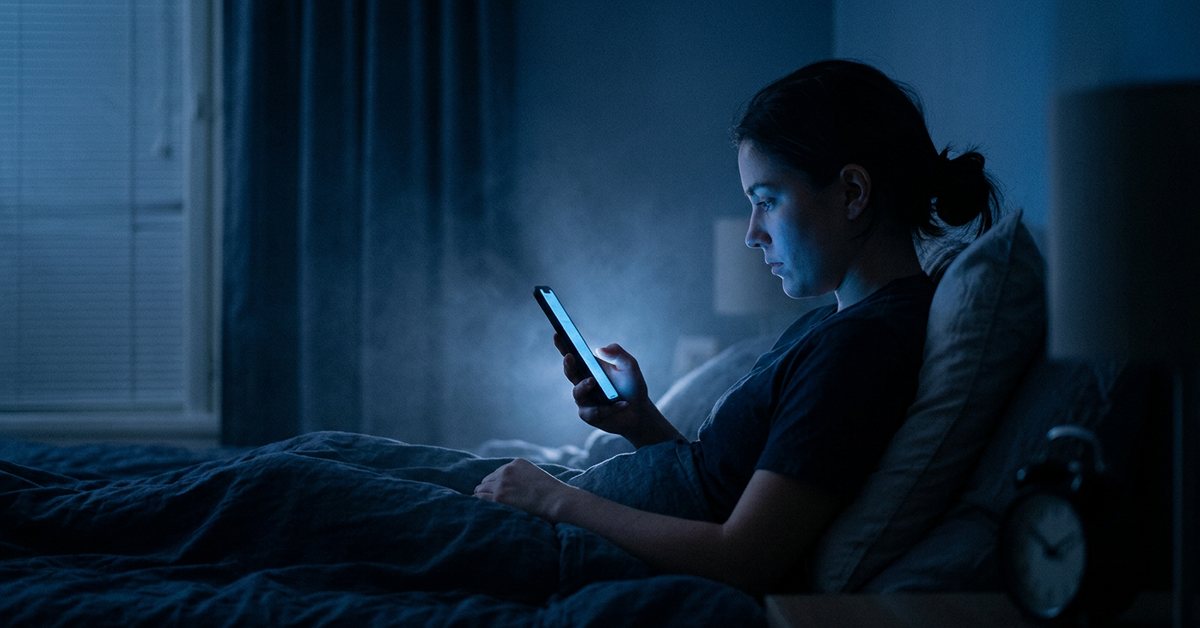
Do you find yourself scrolling through your phone late at night, only to lie awake for hours feeling wired despite a long day? You are not alone, and the reason is likely glowing right in front of your face. Modern screens emit a specific wavelength of high-energy visible light known as blue light, which acts as a powerful signal to your brain that it is daytime. When this light enters your eyes, it interacts with specialized photoreceptors that communicate directly with your internal biological clock. This interaction triggers a chemical chain reaction that halts the production of melatonin, the essential hormone your body needs to transition into sleep. Instead of winding down, your system remains in a state of high alertness, delaying your natural sleep window and reducing the quality of your rest. Understanding the relationship between your devices and your endocrine system is the first step toward reclaiming your night. By learning how blue light alters your physiology, you can make simple adjustments to your evening routine that allow your hormones to function as nature intended. This guide explores the science behind screen use and offers practical strategies to protect your sleep hygiene without giving up technology entirely.
The evolutionary mismatch of modern lighting
Human physiology evolved over millions of years under the predictable rhythm of the sun and the moon. Our internal biological clocks, or circadian rhythms, are fine-tuned to the changing colour temperature of natural light. During the day, the bright blue-enriched light of the sun promotes alertness and cognitive function. As evening approaches, the sun sets and the light transitions to warmer, amber tones, signalling to the brain that it is time to prepare for rest. This transition is a vital biological cue that helps regulate every system in our bodies.
In the modern era, we have introduced a significant evolutionary mismatch. We use smartphones, tablets, and LED televisions that emit concentrated bursts of short-wavelength blue light long after the sun has gone down. To our ancient biological systems, this artificial light mimics the midday sun, creating a state of physiological confusion. The brain receives a signal that it is still daytime, which prevents the natural transition into a nocturnal state. This mismatch is a primary driver of the modern insomnia epidemic and general sleep dissatisfaction.
The role of melanopsin and the master clock
The mechanism behind this disruption begins in the retina of the eye. While we are familiar with the rods and cones that allow us to see shapes and colours, there is a third type of light-sensitive cell called intrinsically photosensitive retinal ganglion cells (ipRGCs). these cells contain a photopigment called melanopsin, which is specifically sensitive to blue light wavelengths between 460 and 480 nanometres. Unlike other visual cells, ipRGCs do not contribute to our conscious vision; instead, they serve as a direct data link to the brain's master clock.
This master clock, known as the suprachiasmatic nucleus (SCN), sits in the hypothalamus. When blue light hits the retina, the ipRGCs send a continuous signal to the SCN, informing it that the environment is bright. The SCN then sends instructions to the pineal gland to keep melatonin production suppressed. Because blue light is so efficient at stimulating these cells, even a few minutes of screen time can be enough to reset your internal timer, pushing your desired sleep onset time much later into the night.
How melatonin and adenosine govern your rest
Sleep is governed by two primary processes: sleep pressure and the circadian rhythm. Sleep pressure is driven by the accumulation of a molecule called adenosine in the brain. The longer you stay awake, the more adenosine builds up, making you feel increasingly drowsy. However, even with high adenosine levels, you may struggle to fall asleep if your circadian rhythm is out of sync. This is where melatonin, often called the hormone of darkness, plays its crucial role as the gatekeeper of the sleep window.
Melatonin does not act as a sedative that knocks you out; rather, it acts as a chemical messenger that tells the body the sun has set and it is time to begin the cooling and repair processes of sleep. When blue light delays the release of melatonin, your core body temperature remains too high and your heart rate stays elevated. This creates a state where you might feel exhausted due to adenosine buildup but are unable to actually drift off because your hormonal signal for sleep has not yet been triggered. If you have persistent insomnia that does not improve with light hygiene, you should consult a healthcare professional.
The impact on sleep architecture and architecture
The consequences of screen use extend beyond just the time it takes to fall asleep. Exposure to artificial light in the evening can significantly alter your sleep architecture, which refers to the different stages of sleep you cycle through during the night. Research suggests that blue light exposure can reduce the amount of time spent in Rapid Eye Movement (REM) sleep, the stage associated with emotional processing, memory consolidation, and creativity. When REM sleep is compromised, you may wake up feeling groggy and mentally sluggish.
Furthermore, the delay in melatonin release often leads to a shorter total sleep duration. Because most people have fixed wake-up times for work or school, delaying sleep onset by an hour or two due to screen use directly cuts into the total recovery time. This chronic sleep deprivation can lead to imbalances in other hormones, such as ghrelin and leptin, which regulate hunger, and cortisol, which manages stress. Over time, the simple act of checking a phone before bed can have wide-ranging effects on your metabolic health and mood stability.
What the scientific research shows
Numerous clinical studies have validated the link between screen use and hormonal disruption. A landmark study published by Chang and colleagues in 2015 compared individuals reading a light-emitting e-book to those reading a printed book. The researchers found that those using the electronic device took longer to fall asleep, had reduced melatonin levels, and reported feeling less alert the following morning. This study was pivotal in demonstrating that the type of light matters just as much as the content being consumed.
Further research has explored the intensity and duration of light exposure. A study by Gooley and others in 2011 demonstrated that exposure to room light in the hours before bedtime can suppress melatonin by more than 50 percent in some individuals. This suggests that it is not just the small screen of a phone, but the overall brightness of our evening environment that contributes to sleep delay. The science consistently points to a dose-response relationship: the brighter and bluer the light, and the longer the exposure, the greater the delay in your sleep hormone production.
Psychological stimulation vs physiological light
While the light itself is a major factor, the content we consume on screens also plays a role in keeping us awake. Engaging with social media, news, or work emails can trigger the release of cortisol and dopamine. Cortisol is the body's primary stress hormone and acts as an antagonist to melatonin. When you encounter something stressful or exciting on your screen, your nervous system enters a state of high arousal, making it even harder for the body to transition into a calm, sleepy state.
This combination of physiological light suppression and psychological stimulation creates a perfect storm for wakefulness. Even if you use a blue light filter on your device, the act of scrolling and processing new information keeps the brain active. To truly support your sleep hormone, you must address both the physical light entering your eyes and the mental load you are carrying into the evening hours. Creating a distinct boundary between the digital world and your sleep environment is essential for long-term health.
Practical steps to protect your melatonin
If you want to improve your sleep tonight, the most effective strategy is to implement a digital sunset. Ideally, you should turn off all brightly lit screens at least 60 to 90 minutes before you intend to sleep. If you must use devices, utilize built-in software features like Night Shift or Blue Light Filter, which shift the screen's colour palette toward the warmer end of the spectrum. While these filters are not a perfect solution, they are significantly better for your circadian rhythm than raw blue light.
Another effective strategy is to swap your screen time for low-light activities that do not involve high-energy visible light. Reading a physical book under a warm, dim lamp, listening to a podcast, or practicing gentle stretching can all help lower your heart rate and allow melatonin levels to rise naturally. Consider replacing your bright overhead LED lights with lamps that use warm-toned bulbs. By dimming your environment, you provide the necessary environmental cues for your master clock to start the countdown to sleep.
What to try tonight
- 01Switch off all screens 90 minutes before bed to allow melatonin levels to rise.
- 02Use warm-toned, dim lamps in the evening instead of bright overhead LED lights.
- 03Enable blue light filters or night modes on all devices if you must use them after dark.
- 04Replace scrolling with a non-digital hobby like reading a physical book or journaling.
- 05Get bright natural sunlight early in the morning to help anchor your circadian rhythm.
- 06Keep your bedroom a screen-free zone to associate the space only with rest.
Research and references
- 1. Chang et al. (2015). Evening use of light-emitting eReaders negatively affects sleep, circadian timing, and next-morning alertness. Proceedings of the National Academy of Sciences.
- 2. Gooley et al. (2011). Exposure to Room Light before Bedtime Suppresses Melatonin Onset and Shortens Melatonin Duration in Humans. The Journal of Clinical Endocrinology & Metabolism.
- 3. West et al. (2016). Blue light from light-emitting diodes elicits a dose-dependent suppression of melatonin in humans. Journal of Applied Physiology.
- 4. Wahl et al. (2019). The human circadian system can adapt to different daylengths and light intensities. Journal of Biological Rhythms.
This page is general information, not medical advice. If sleeplessness persists for more than a few weeks, please speak with a doctor or a sleep clinician.