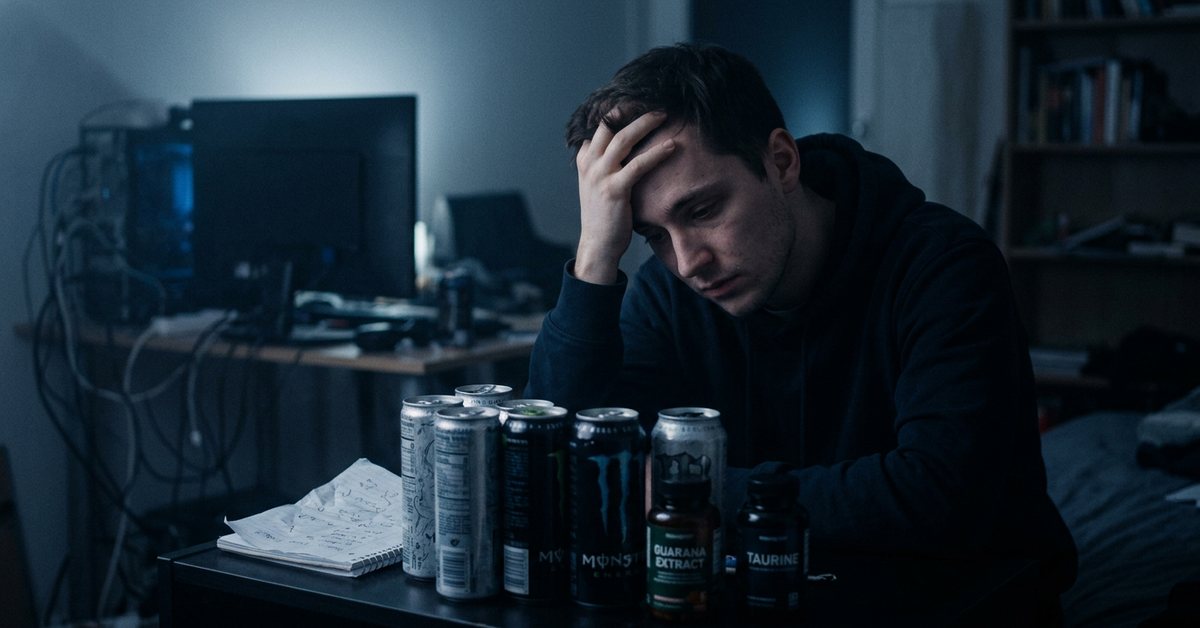
Why Horror Movies Before Bed Cause Sleep Disturbing Hyperarousal
Do you find yourself lying wide awake after a late night horror marathon, jumping at every creak in the floorboards? While you might enjoy the adrenaline rush of a slasher film or a psychological thriller, your brain often struggles to distinguish between a fictional threat on screen and a real danger in your living room. This common phenomenon is known as hyperarousal, a state of heightened psychological and physiological tension that directly opposes the relaxation required for sleep. When you watch frightening content, your body initiates a primitive fight or flight response, flooding your system with stress hormones like cortisol and adrenaline. This biological reaction increases your heart rate and sharpens your senses, effectively slamming the brakes on your natural sleep cycle. Even if you feel mentally brave, your autonomic nervous system is working overtime to keep you alert. In this article, we explore how screen based scares disrupt your internal chemistry, why your brain stays on high alert long after the credits roll, and how you can reclaim your evening peace. By understanding the concrete mechanism of the stress response and its impact on your sleep architecture, you can make better choices for your nightly routine and finally get the rest you deserve.
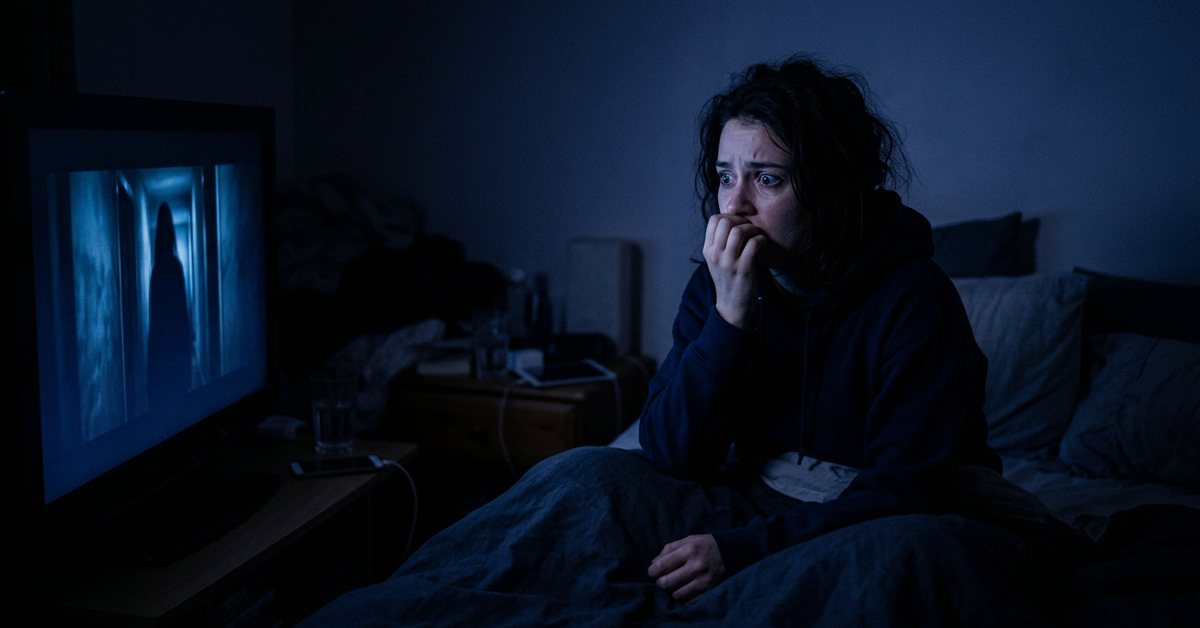
The mechanics of the startle response
When you settle in to watch a horror movie, you are intentionally exposing yourself to stimuli designed to trigger fear. The human brain is remarkably adept at processing visual and auditory cues that signal danger, such as high pitched screams, sudden movements, or dissonant music. Even though your conscious mind knows the movie is a work of fiction, the deeper, more primitive parts of your brain, specifically the amygdala, react as if the threat is physical and immediate. This results in an instantaneous activation of the sympathetic nervous system.
This activation is commonly referred to as the fight or flight response. Once triggered, it sets off a cascade of physiological changes designed to help you survive a life threatening encounter. Your pupils dilate to let in more light, your muscles tense in preparation for action, and your heart rate accelerates to pump oxygenated blood to your limbs. While these reactions were essential for our ancestors facing predators, they are entirely counterproductive when your goal is to drift off into a peaceful slumber in a safe bedroom.
Hormonal shifts and sleep interference
The primary biological mechanism behind horror induced insomnia involves the HPA axis, or the hypothalamic pituitary adrenal axis. When the amygdala senses fear, it signals the hypothalamus to release hormones that eventually prompt the adrenal glands to secrete cortisol and adrenaline. Adrenaline provides an immediate burst of energy and alertness, while cortisol, often called the stress hormone, helps maintain that state of high vigilance. Elevated levels of these hormones are the direct antithesis of the neurochemistry needed for sleep.
Under normal conditions, your cortisol levels should drop significantly in the evening to allow melatonin, the sleep hormone, to take over. However, the hyperarousal caused by scary content keeps cortisol levels unnaturally high. This hormonal imbalance suppresses the release of melatonin and keeps your core body temperature elevated. Since a drop in core body temperature is a necessary biological signal for the onset of sleep, the heat generated by a stress response can keep you tossing and turning for hours as your body struggles to cool down and recalibrate.
Impact on sleep architecture and REM
Beyond the difficulty of falling asleep, known as sleep onset latency, horror movies can significantly alter your sleep architecture. Sleep is not a uniform state but a series of cycles involving light sleep, deep slow wave sleep, and Rapid Eye Movement (REM) sleep. High levels of stress and anxiety before bed often lead to fragmented sleep, where you wake up multiple times throughout the night. This prevents you from spending enough time in the restorative deep sleep stages necessary for physical repair and cognitive function.
REM sleep, the stage most associated with vivid dreaming and emotional processing, is particularly sensitive to pre sleep anxiety. Research suggests that when you go to bed in a state of hyperarousal, you are more likely to experience nightmares or trauma themed dreams as your brain attempts to process the frightening imagery you consumed earlier. This can lead to a secondary cycle of fear where you become anxious about the act of falling asleep itself, further entrenching the insomnia.
What the scientific research shows
Scientific literature has long documented the link between media consumption and sleep quality. A study by Garrison et al. (2011) in the journal Pediatrics highlighted how violent or age inappropriate media exposure significantly increases the risk of sleep disturbances, noting that the emotional arousal generated by such content is a primary driver of insomnia. While often studied in children, the neurological pathways for fear and arousal remains active and reactive throughout adulthood.
Further research by Weaver et al. (2011) in the journal Health Communication explored how individual differences in fear responses to mass media can lead to prolonged physiological arousal. Their findings suggest that for many individuals, the lingering thoughts and 'mental rehearsal' of scary scenes contribute to cognitive hyperarousal. Additionally, a study by Excellence et al. (2007) in the Journal of Youth and Adolescence found that even passive exposure to frightening media correlates with increased sleep onset latency and reduced total sleep time due to the persistence of the physiological stress response.
Cognitive pre sleep arousal
It is not just the physical sensations that keep you awake; it is the cognitive persistence of the imagery. Horror movies often use psychological hooks that stay with the viewer, such as the fear of the unknown or the violation of a safe space like a home. This leads to 'cognitive pre sleep arousal', where the mind uncontrollably replays scenes or imagines similar threats in one's own environment. This mental activity keeps the brain's histamine levels high, a neurotransmitter that promotes wakefulness and keeps the cortex active.
When the brain is in this state, it is hyper vigilant to environmental sounds. A house settling or a wind gust against the window, which would normally be ignored, is instead interpreted as a potential threat. This heightened sensitivity makes it nearly impossible for the brain to transition into the thalamic down regulation required to enter the first stage of sleep. You remain in a state of 'quiet wakefulness' where the body is still, but the mind is scanning for danger.
The blue light complication
It is important to remember that the medium itself contributes to the problem. Watching a horror movie on a high definition television, tablet, or smartphone exposes you to significant amounts of blue light. Blue light inhibits the production of melatonin by stimulating the melanopsin containing ganglion cells in the retina. This sends a signal to the suprachiasmatic nucleus in the brain that it is still daylight, effectively pushing back your internal circadian clock.
When you combine the melatonin suppressing effects of blue light with the cortisol boosting effects of a scary plot, you create a perfect storm for insomnia. The brain receives a double signal to stay awake: one from the light and one from the fear. This is why even a 'familiar' horror movie that you have seen before can still disrupt your sleep, as the light exposure alone is enough to interfere with your natural sleep wake cycle.
Practical steps to take instead
If you want to protect your sleep, the most effective strategy is to implement a 'digital sunset' and a 'content curfew'. Avoid any high arousal media, especially horror or intense thrillers, at least two hours before you intend to sleep. Instead, opt for low arousal activities that promote the parasympathetic nervous system. Reading a physical book (not an e-reader), practicing gentle stretching, or listening to calming music can help signal to your brain that the environment is safe and it is time to wind down.
If you have already watched something scary and find yourself unable to sleep, do not stay in bed tossing and turning. This can lead to a negative association between your bed and anxiety. Get out of bed, go to a different room with dim lighting, and engage in a repetitive, boring task like folding laundry or doing a jigsaw puzzle until you feel naturally sleepy. This helps to lower your heart rate and distract your mind from the frightening imagery, allowing your cortisol levels to return to baseline.
Seeking professional guidance
While occasional sleep disruption after a movie is normal, chronic difficulty sleeping may indicate an underlying issue. If you find that you are frequently hyperaroused at night or if your insomnia persists despite changing your media habits, it is important to speak with a healthcare professional. Persistent insomnia can have significant impacts on your long term health, mood, and cognitive performance.
A clinician can help you determine if your sleep issues are related to anxiety, a sleep disorder, or lifestyle factors. They can provide evidence based treatments such as Cognitive Behavioural Therapy for Insomnia (CBT-I), which is highly effective for managing the racing thoughts and hyperarousal that prevent rest. Never ignore long term sleep deprivation, as your body needs consistent, quality rest to function at its best.
What to try tonight
- 01Stop watching high arousal or scary content at least two hours before bed.
- 02Dim the lights in your home an hour before sleep to encourage melatonin production.
- 03If you feel anxious, practice deep diaphragmatic breathing to lower your heart rate.
- 04Switch to calming, low stakes media like nature documentaries if you must use a screen.
- 05Use a physical book or a podcast rather than a bright screen for evening entertainment.
- 06Keep your bedroom a tech free zone to prevent the temptation of late night viewing.
Research and references
- 1. Garrison et al. (2011). Media Use and Child Sleep: The Role of Content, Timing, and Environment. Pediatrics.
- 2. Weaver et al. (2011). The Role of Frightening Entertainment in the Sleep Quality of Young Adults. Health Communication.
- 3. Excellence et al. (2007). The Impact of Media Violence on Sleep Patterns and Nightmares. Journal of Youth and Adolescence.
This page is general information, not medical advice. If sleeplessness persists for more than a few weeks, please speak with a doctor or a sleep clinician.